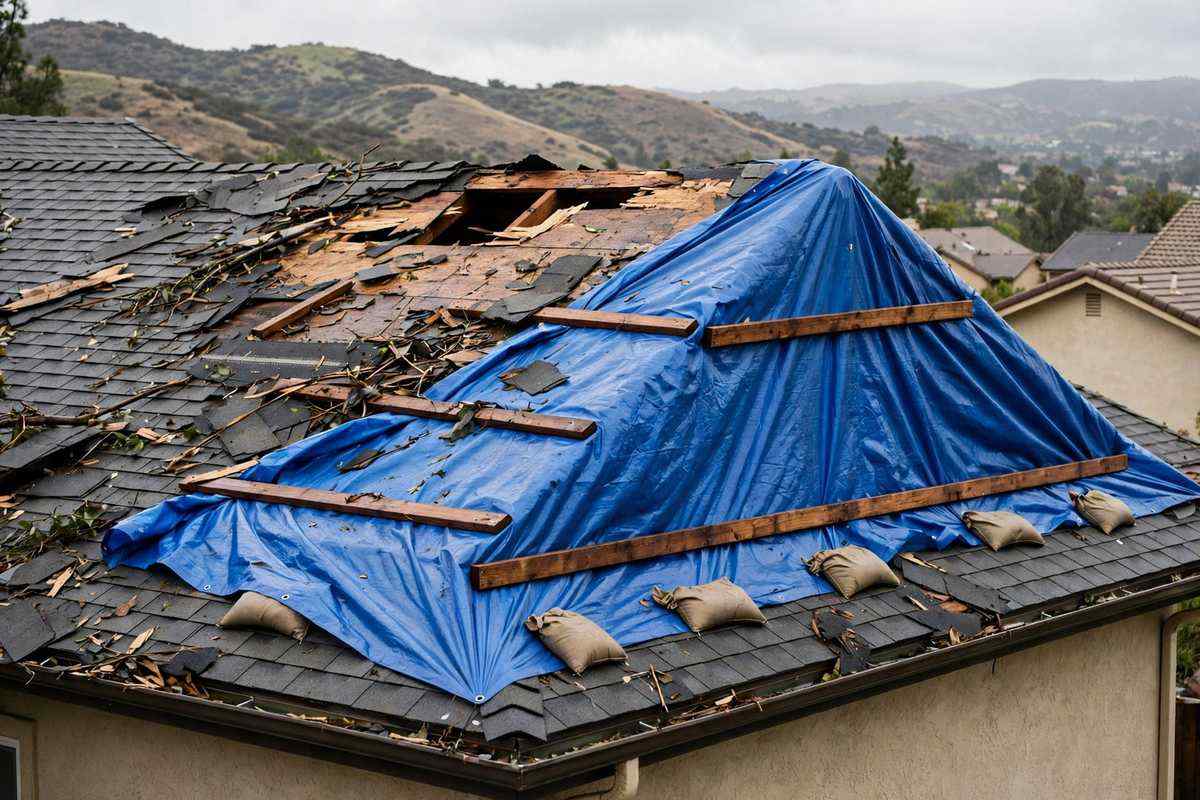
Written scope
Sheathing thickness and nailing follow the code and the manufacturer's requirements for each roof.
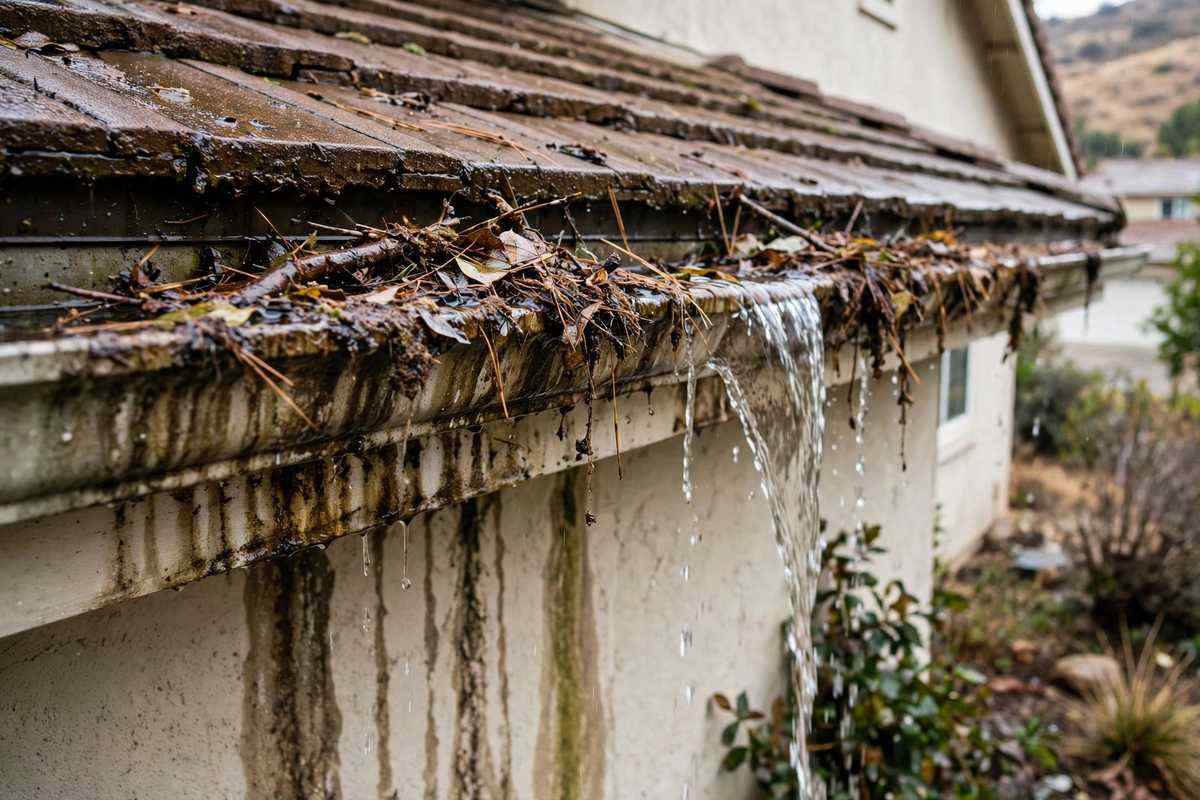
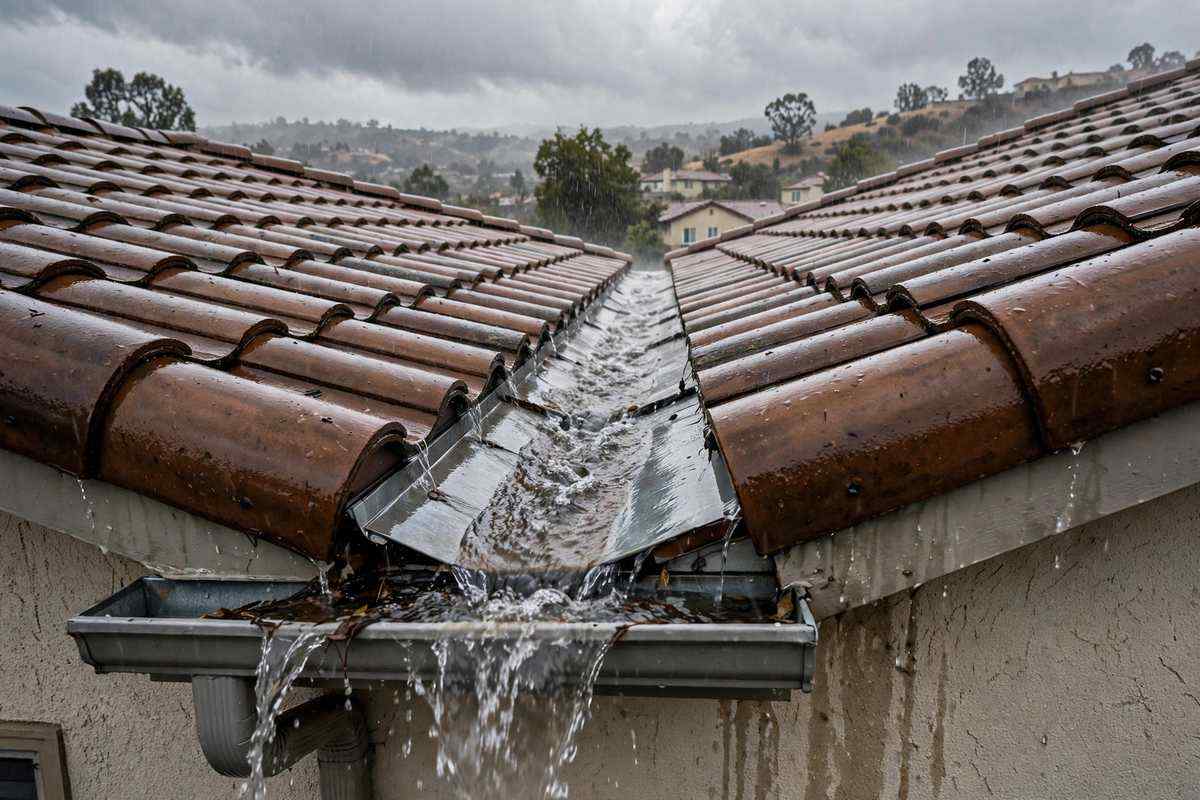
Roof decking is the layer everything else depends on, and in Simi Valley it is most often found to be soft or rotted at tear-off, after years of a slow leak that never showed inside until it was advanced.
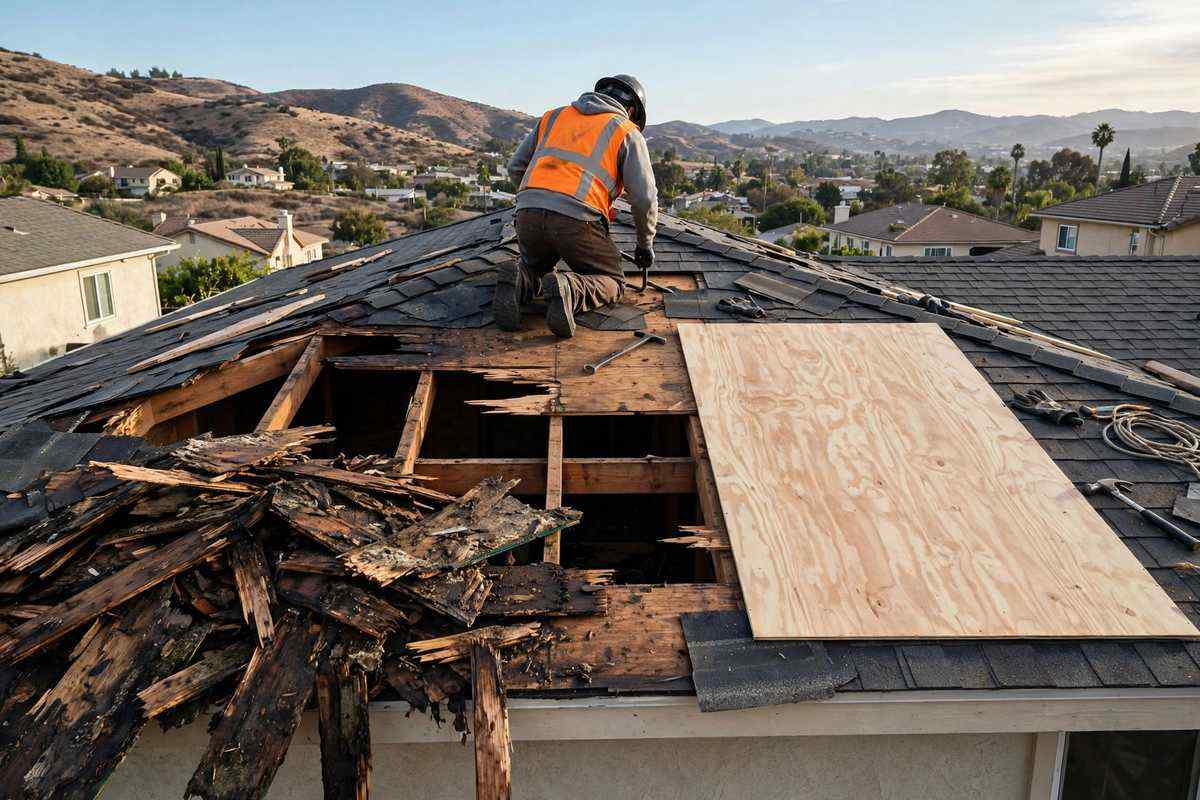
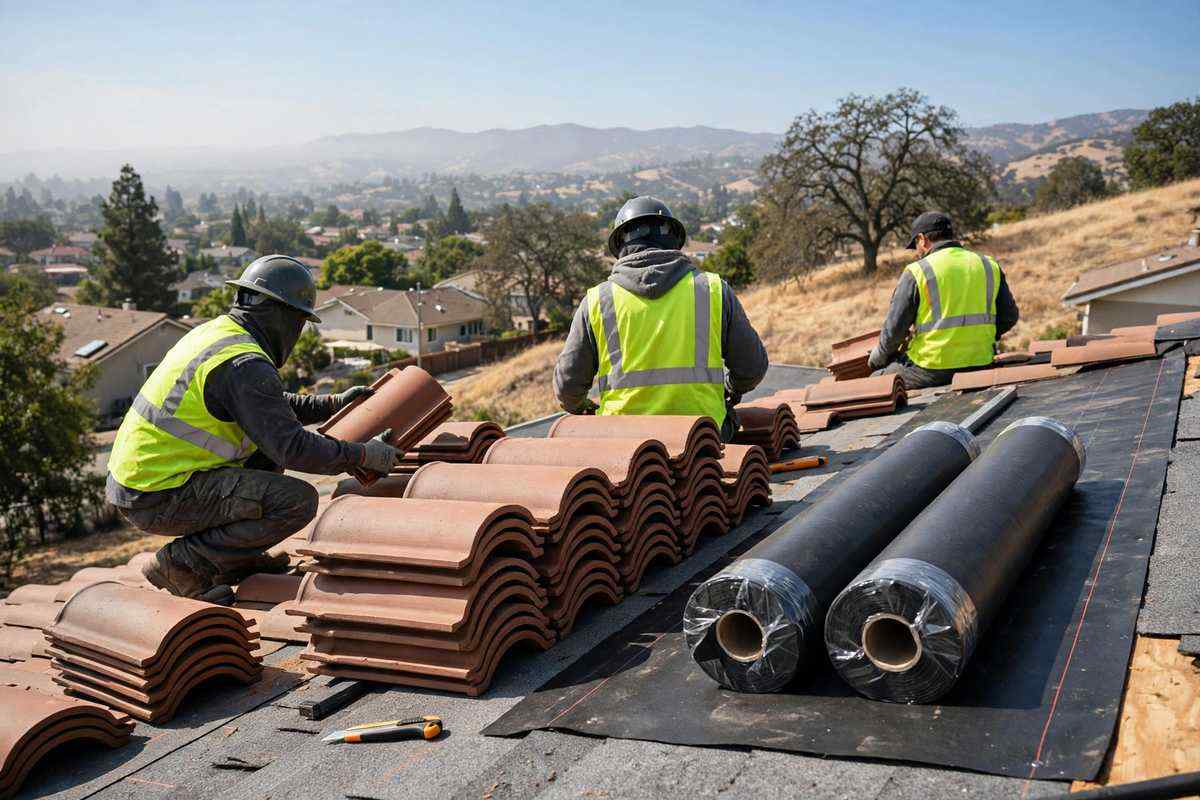
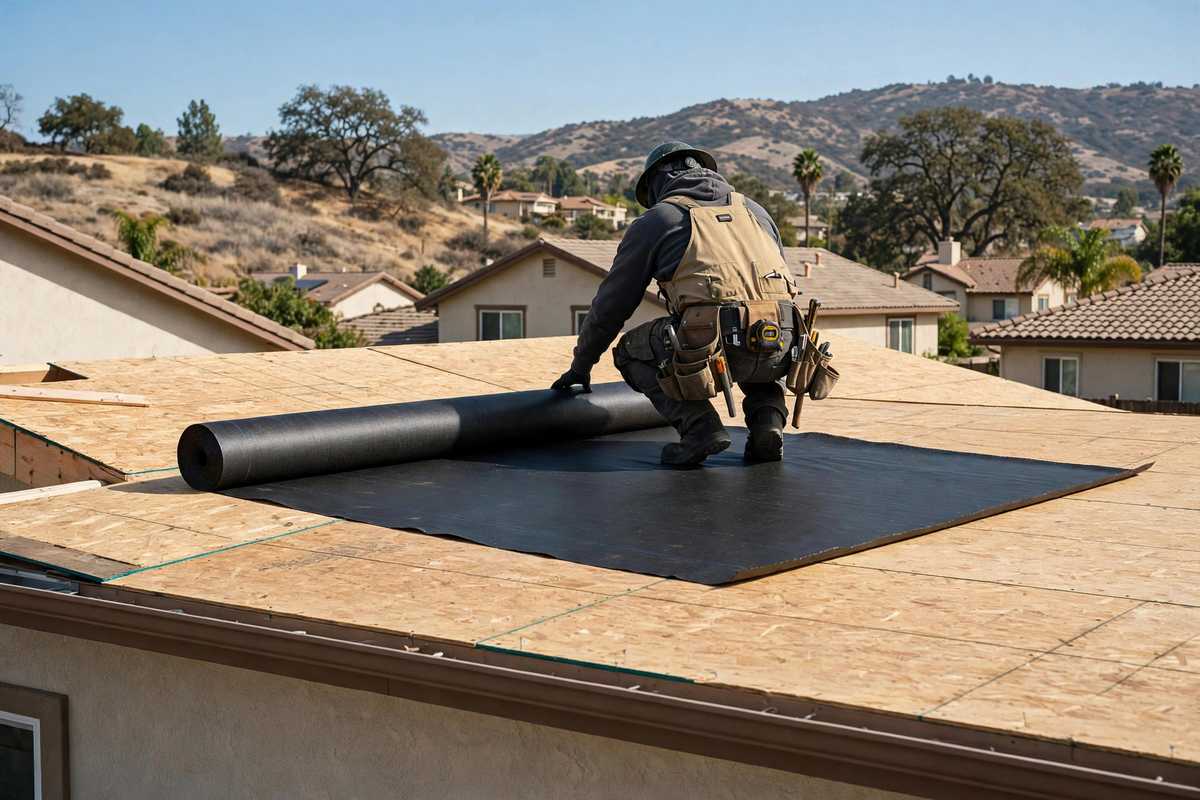
Decking repair is therefore scoped at tear-off, not before it. Soft sheets are shown to you and photographed, replaced, and only then covered with new underlayment. A scope written before tear-off cannot honestly price decking it has not seen.
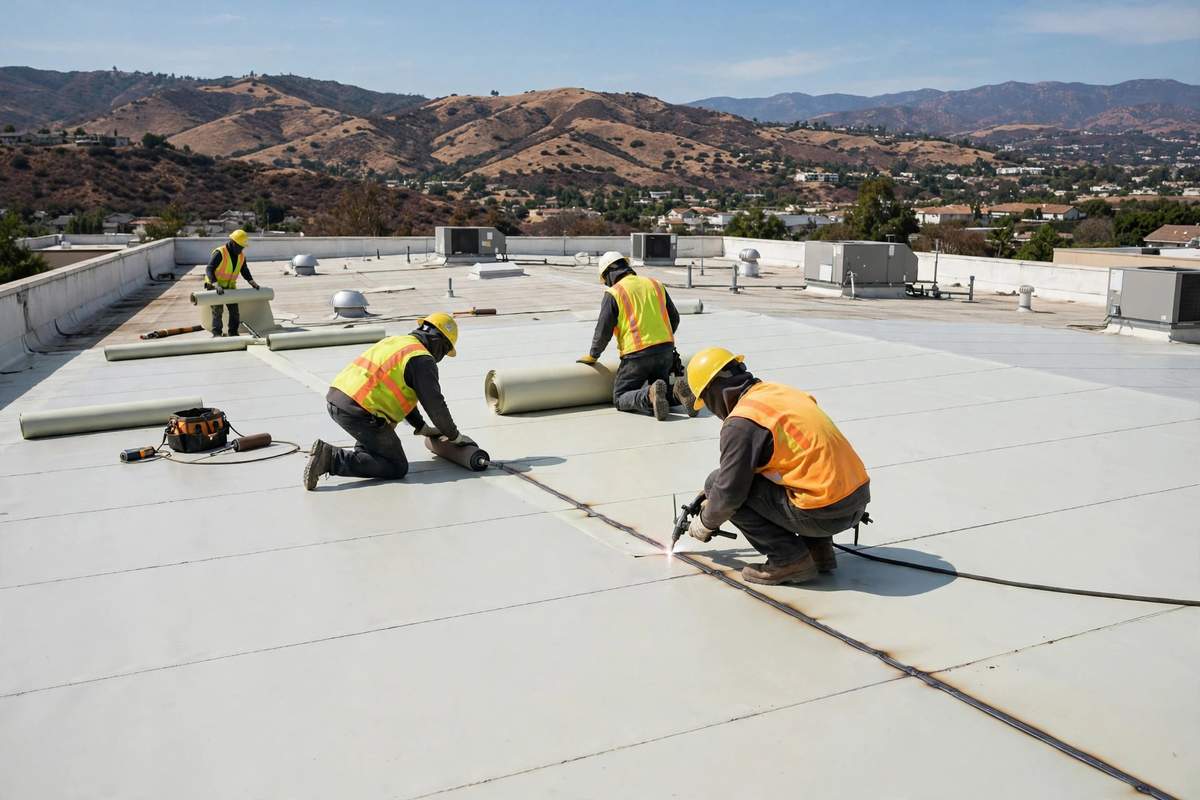
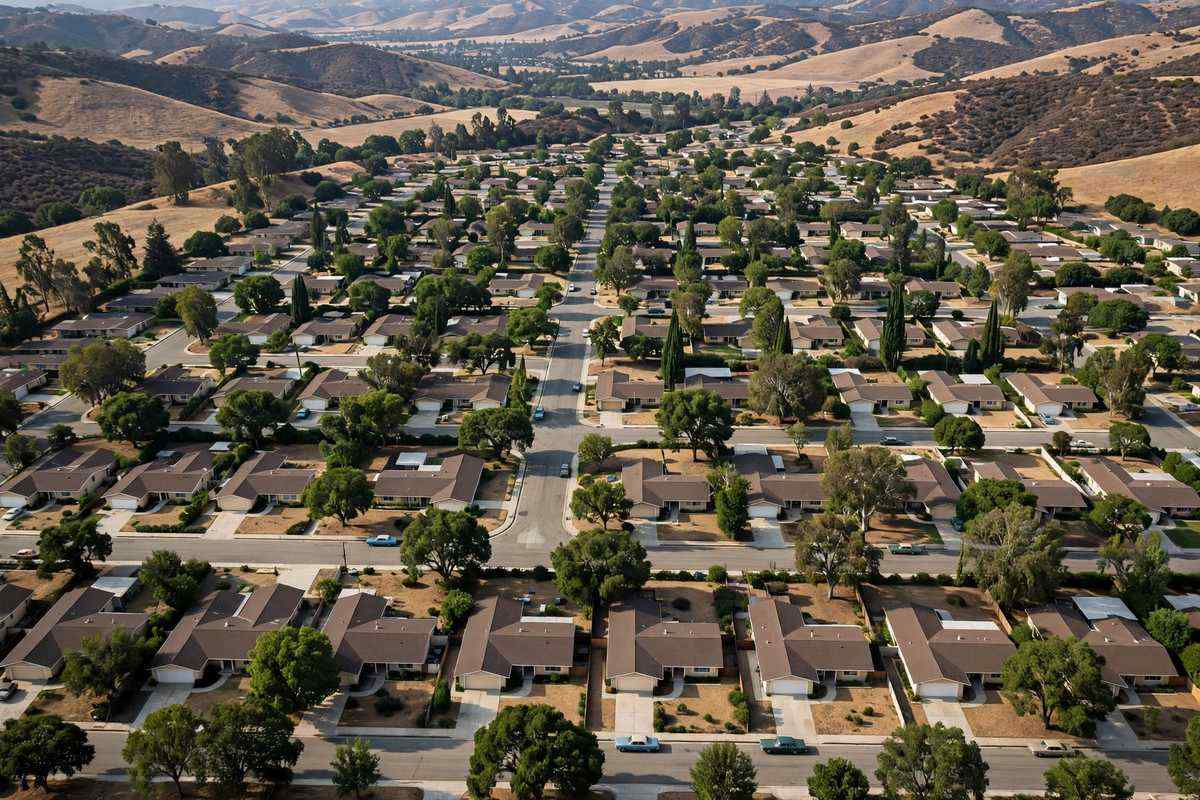
Soft sheets are shown to you and photographed, replaced, and only then covered with new underlayment.
For a single-family re-roof in CEC Climate Zone 9, the Title 24 Part 6 prescriptive cool-roof values are an aged solar reflectance of at least 0.20 with thermal emittance of at least 0.75, or an SRI of at least 16, on steep slopes of 2:12 or more, and at least 0.63 with emittance of at least 0.75, or an SRI of at least 75, on low slopes under 2:12. That requirement is triggered when more than 50 percent of the roof area is replaced, which is a different threshold from the City permit trigger, and the parcel's zone should be checked with the CEC zone finder before a product is specified.
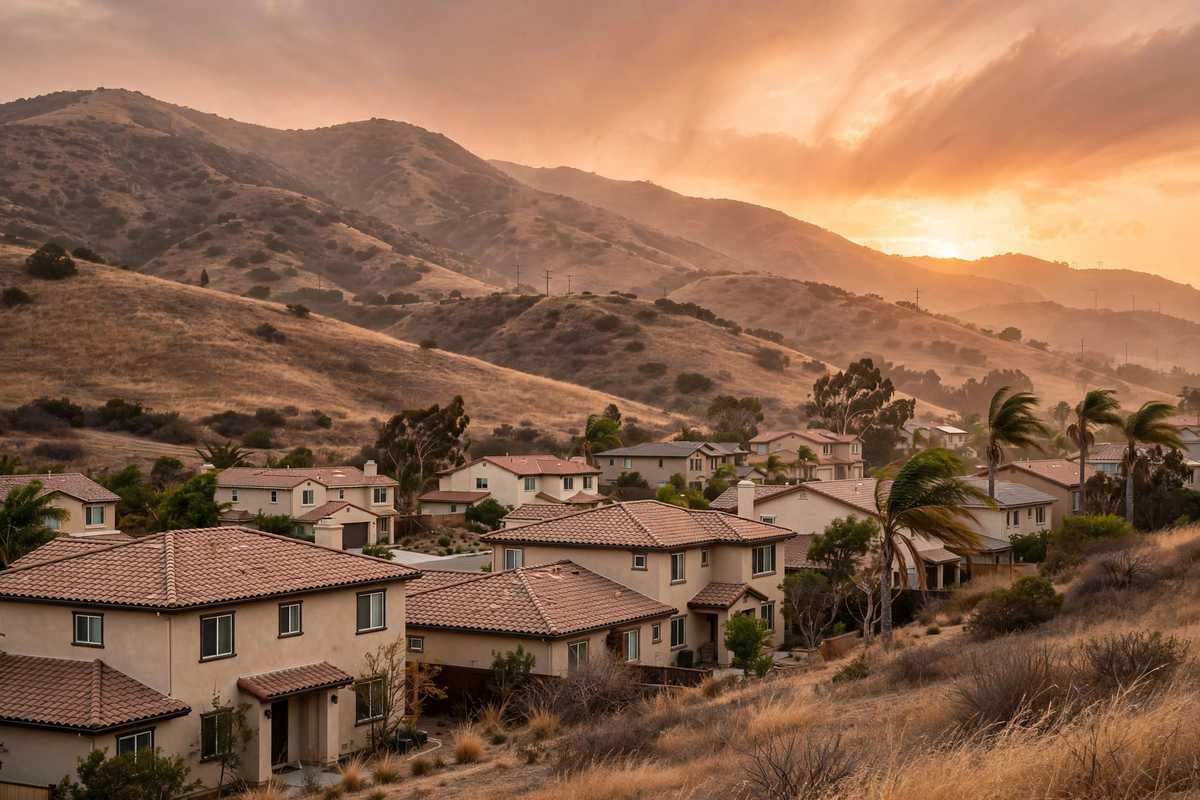
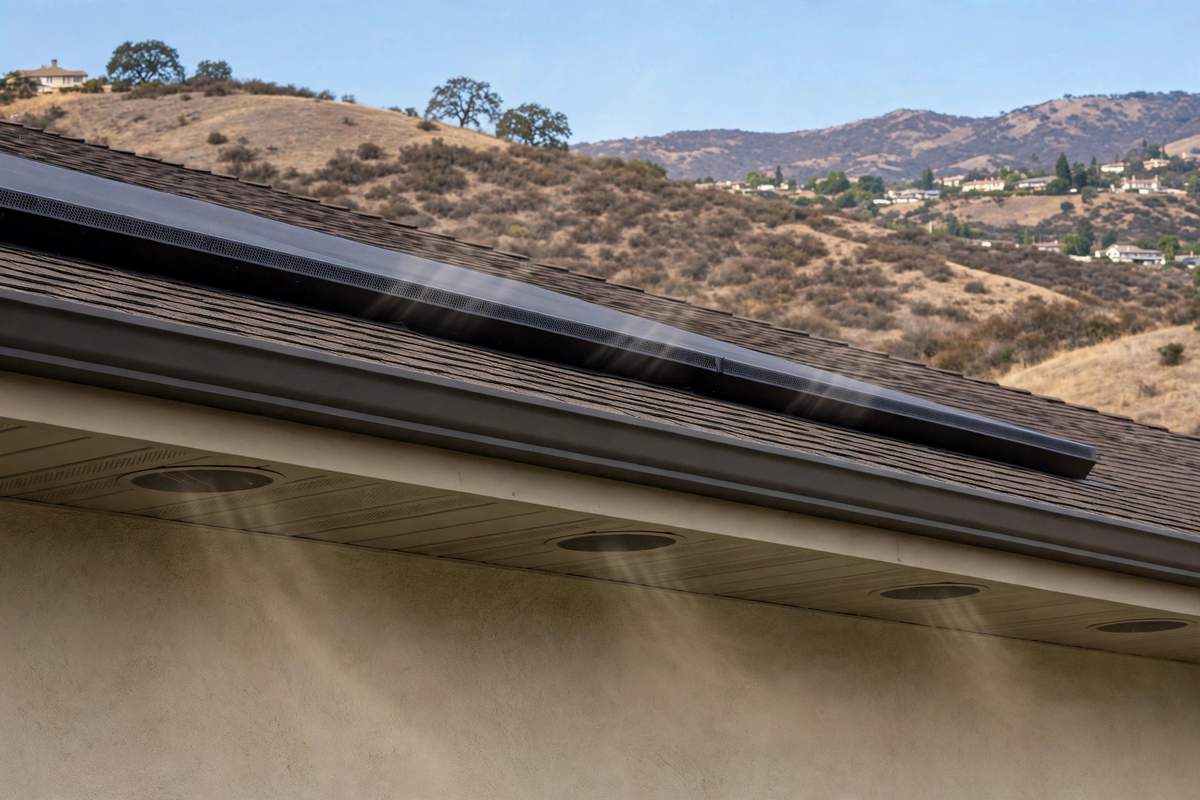
Simi Valley contains High and Very High Fire Hazard Severity Zone parcels, but it is not correct to say that all of Simi Valley is Very High. The parcel's zone must be checked in the CAL FIRE / VCFD Fire Hazard Severity Zone viewer, and on a wildland-urban interface parcel the current citation is Title 24 Part 7, the California Wildland-Urban Interface Code, not the retired CBC Chapter 7A. On such a parcel a Class A fire-rated roof assembly is required.
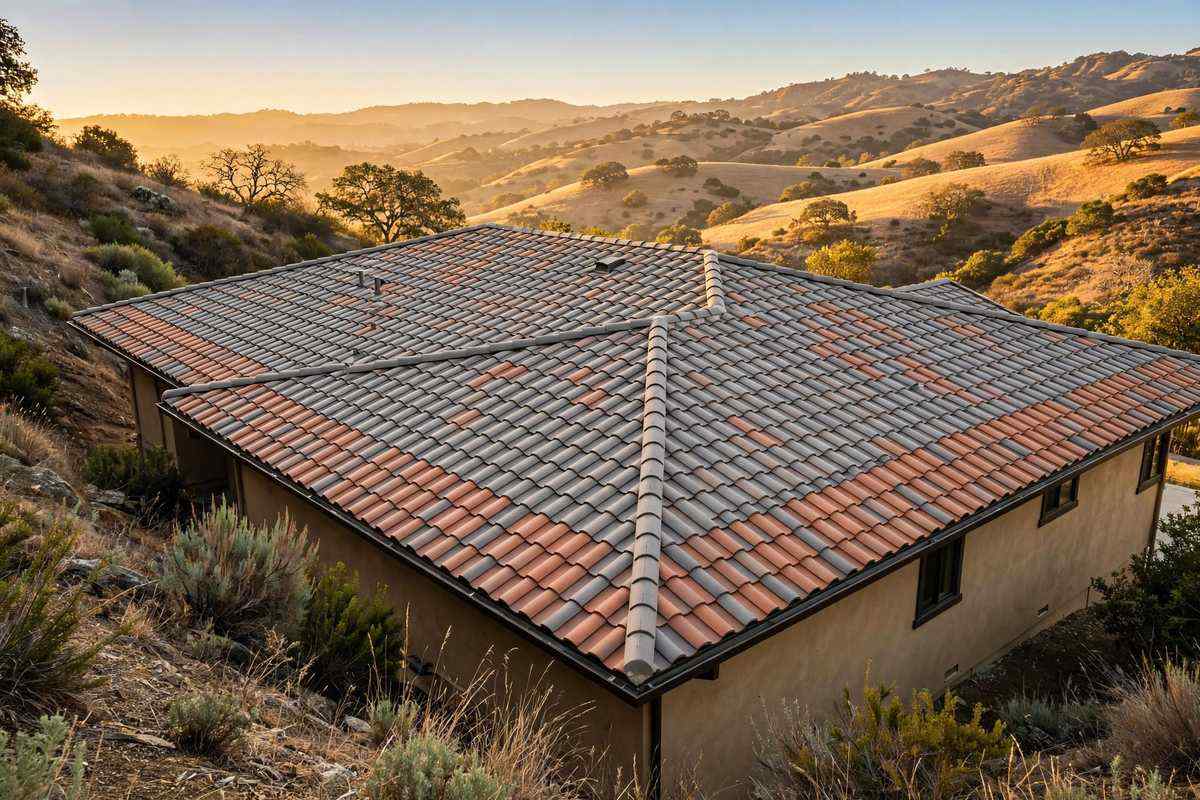
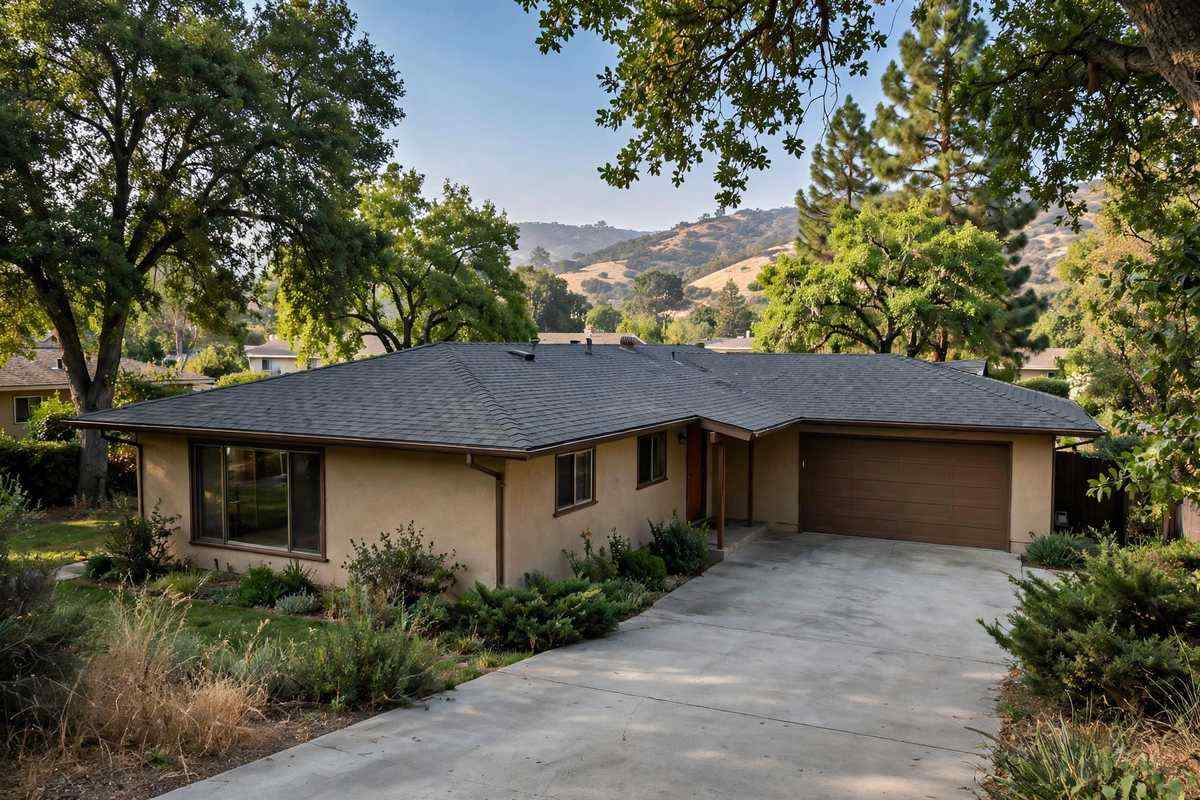
Published regional market ranges include architectural asphalt at $550 to $900 per square and tile re-lay at $900 to $1,600 per square in a Torrance / South Bay 2026 guide, and California repair work most commonly at $450 to $3,200 in a Modernize guide updated 26 August 2026. One square is 100 square feet of roof surface, not floor area, and a written estimate follows inspection of the actual roof.
We fix the deck first so your roof has a solid base.
Roof decking is the layer everything else depends on, and in Simi Valley it is most often found to be soft or rotted at tear-off, after years of a slow leak that never showed inside until it was advanced.
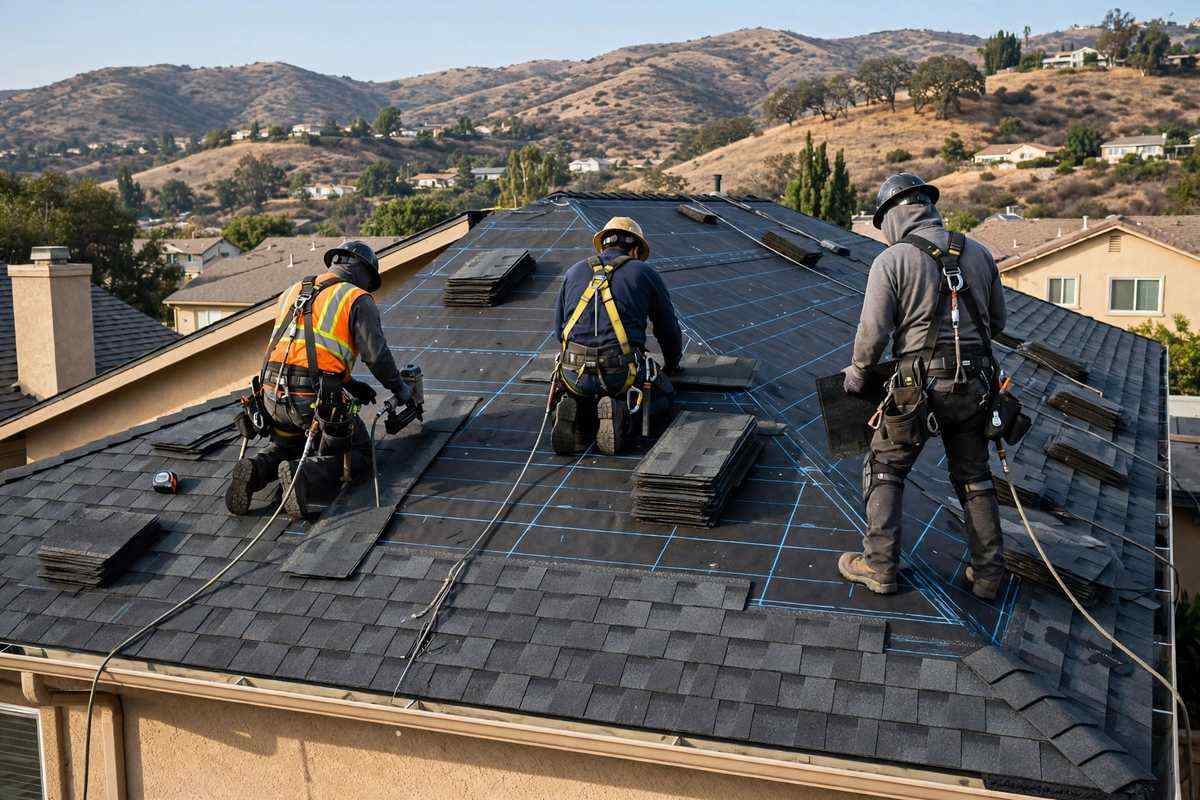
That requirement is triggered when more than 50 percent of the roof area is replaced, which is a different threshold from the City permit trigger, and the parcel's zone should be checked with the CEC zone finder before a product is specified.
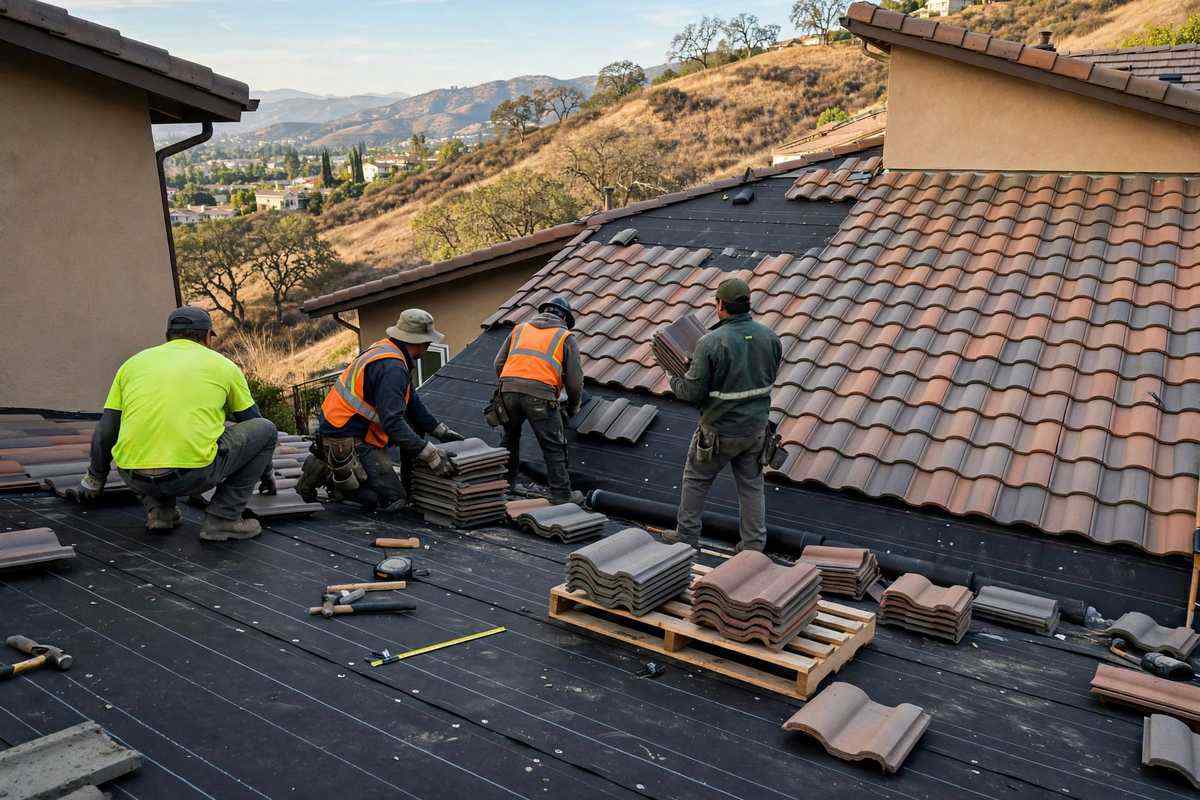
Simi Valley contains High and Very High Fire Hazard Severity Zone parcels, but it is not correct to say that all of Simi Valley is Very High.
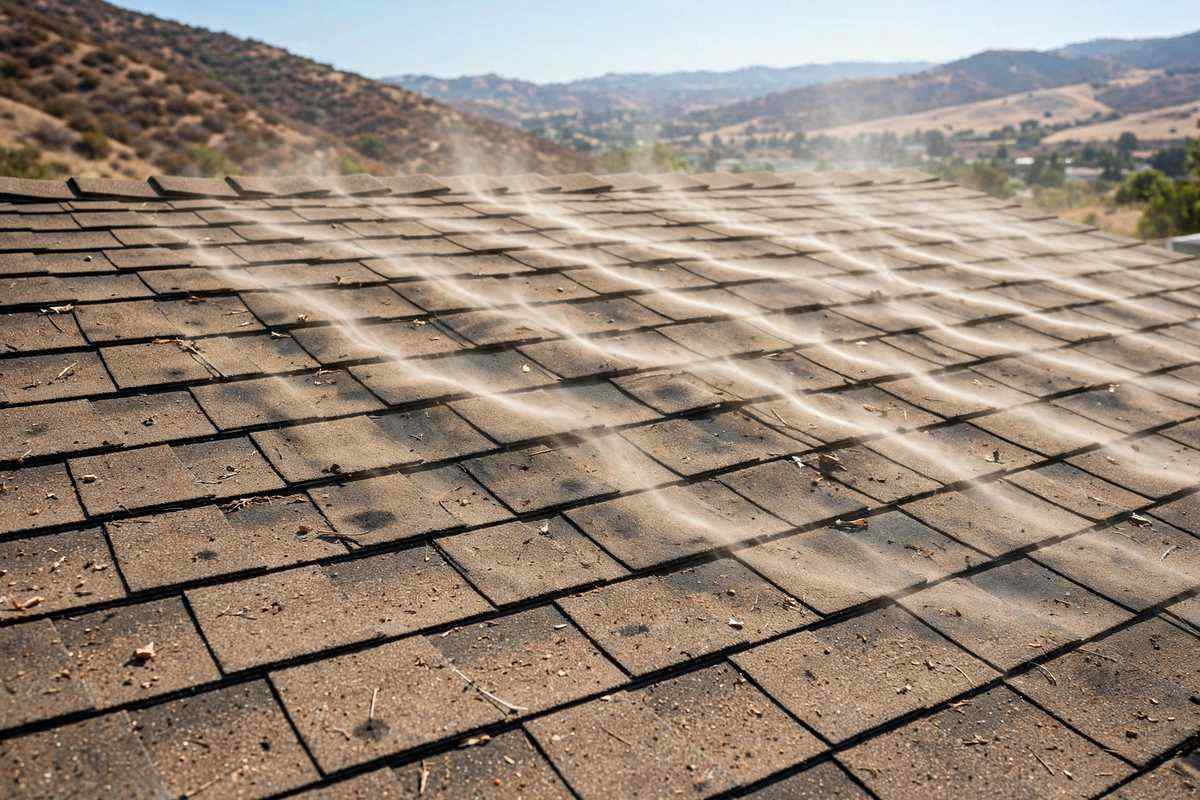
The parcel's zone must be checked in the CAL FIRE / VCFD Fire Hazard Severity Zone viewer, and on a wildland-urban interface parcel the current citation is Title 24 Part 7, the California Wildland-Urban Interface Code, not the retired CBC Chapter 7A.
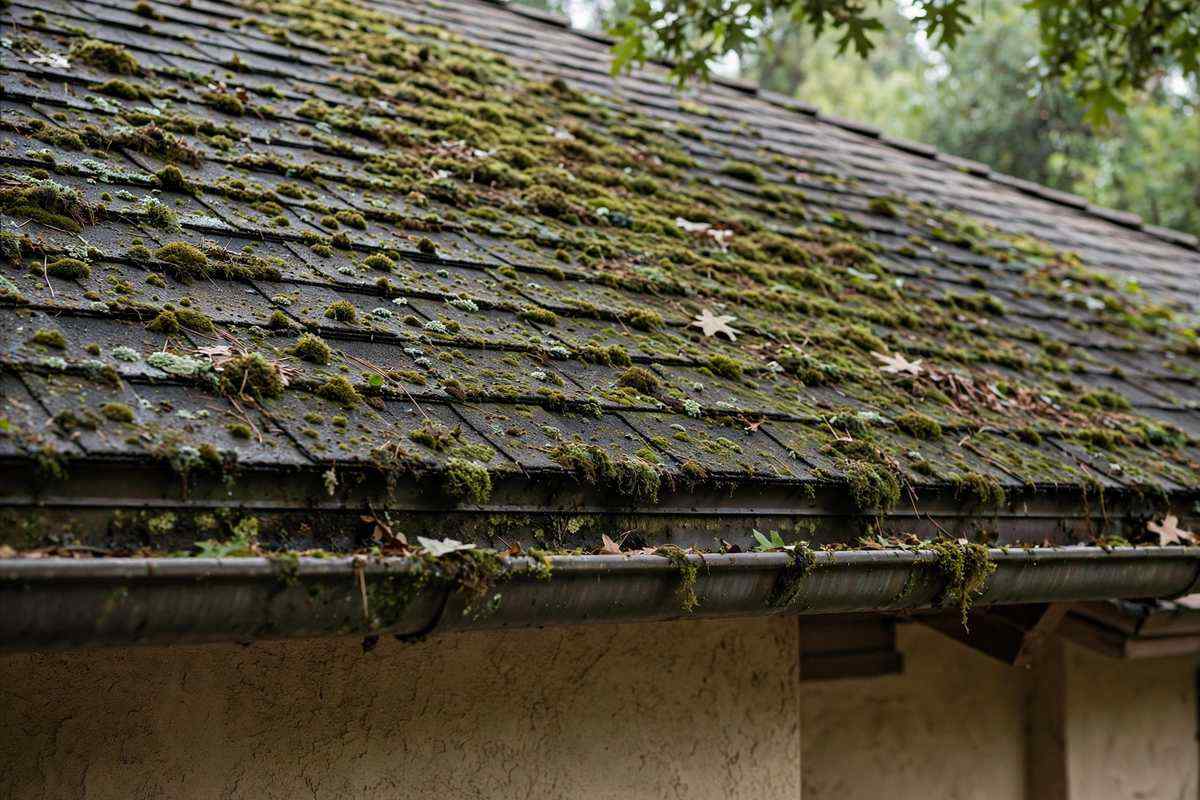
On such a parcel a Class A fire-rated roof assembly is required.
Call (805) 669-9300 to arrange an inspection and a written estimate.
Published regional market ranges include architectural asphalt at $550 to $900 per square and tile re-lay at $900 to $1,600 per square in a Torrance / South Bay 2026 guide, and California repair work most commonly at $450 to $3,200 in a Modernize guide updated 26 August 2026.
One square is 100 square feet of roof surface, not floor area, and a written estimate follows inspection of the actual roof.
Roof decking is the layer everything else depends on, and in Simi Valley it is most often found to be soft or rotted at tear-off, after years of a slow leak that never showed inside until it was advanced.
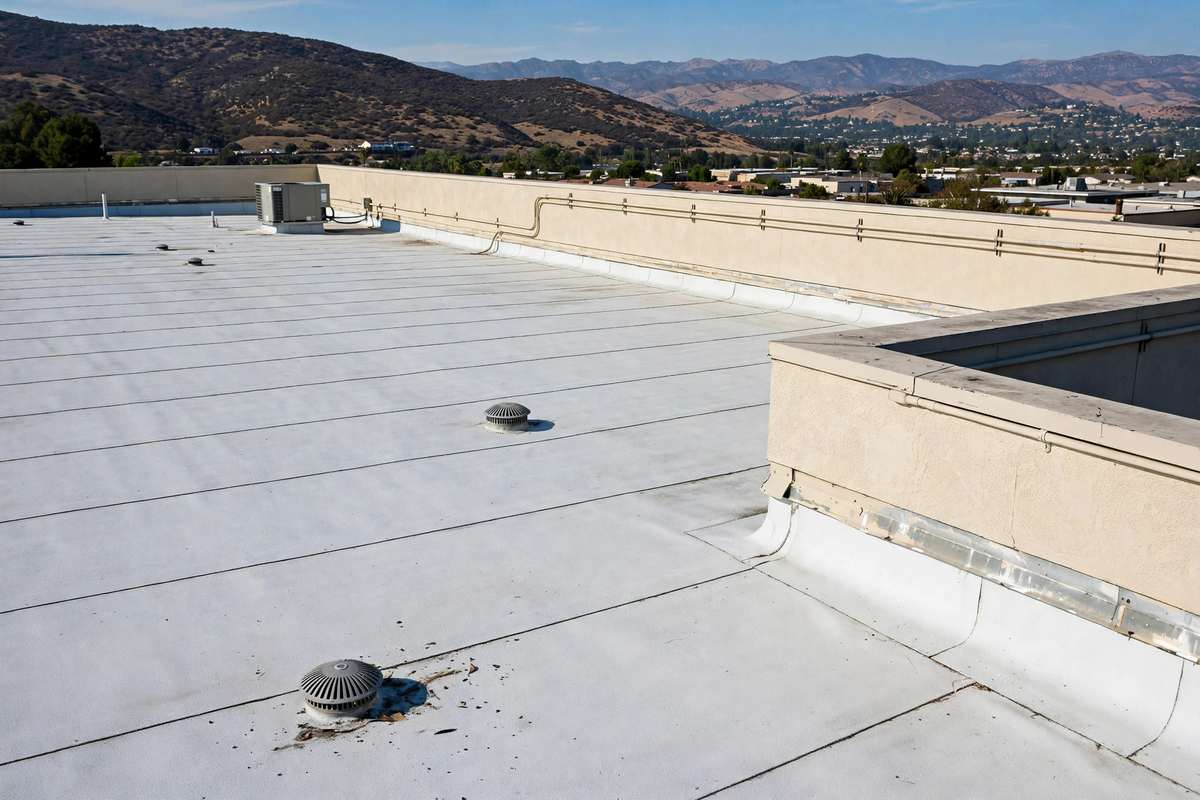
Decking repair is therefore scoped at tear-off, not before it.
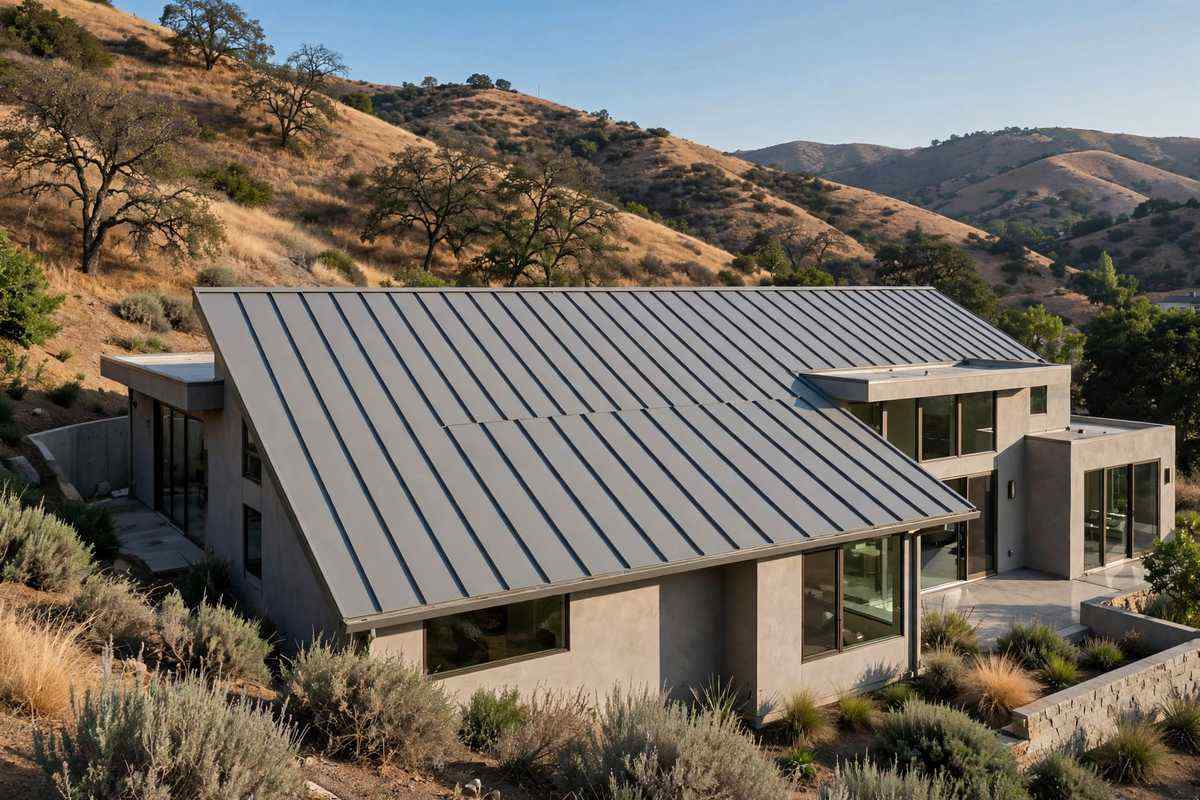
Soft sheets are shown to you and photographed, replaced, and only then covered with new underlayment.
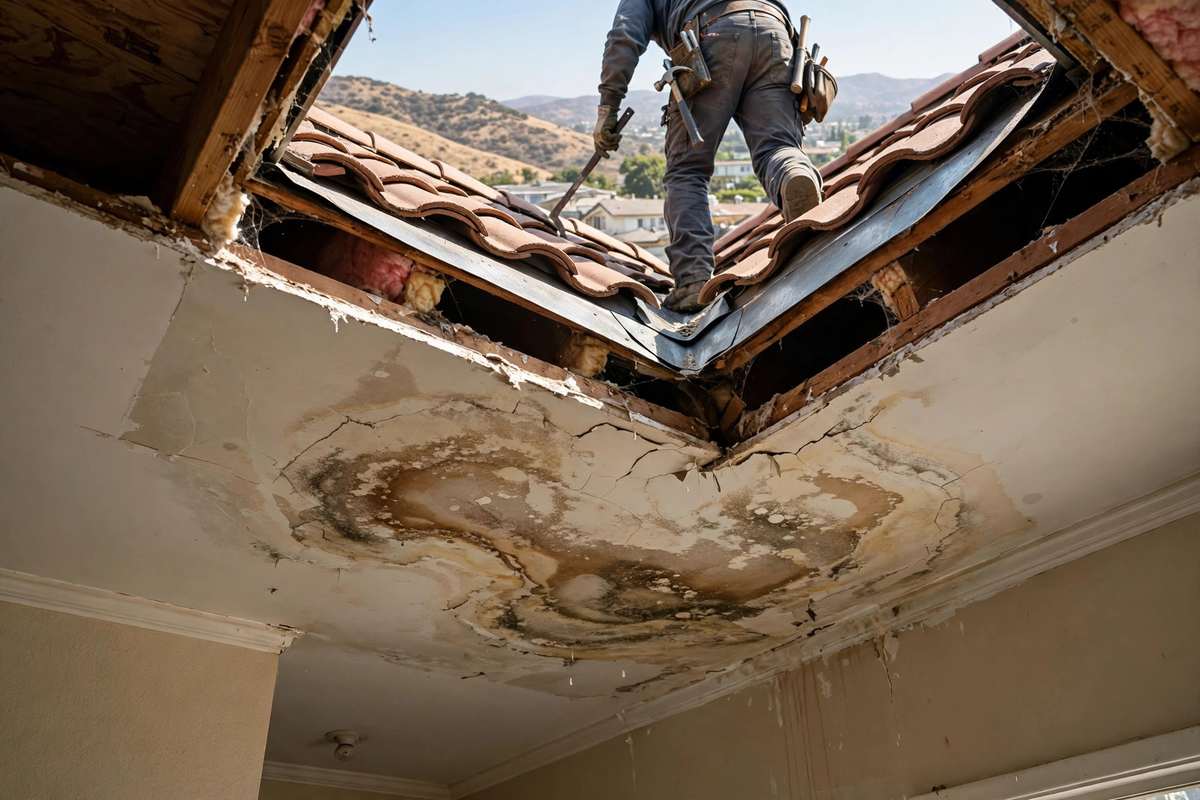
A scope written before tear-off cannot honestly price decking it has not seen.
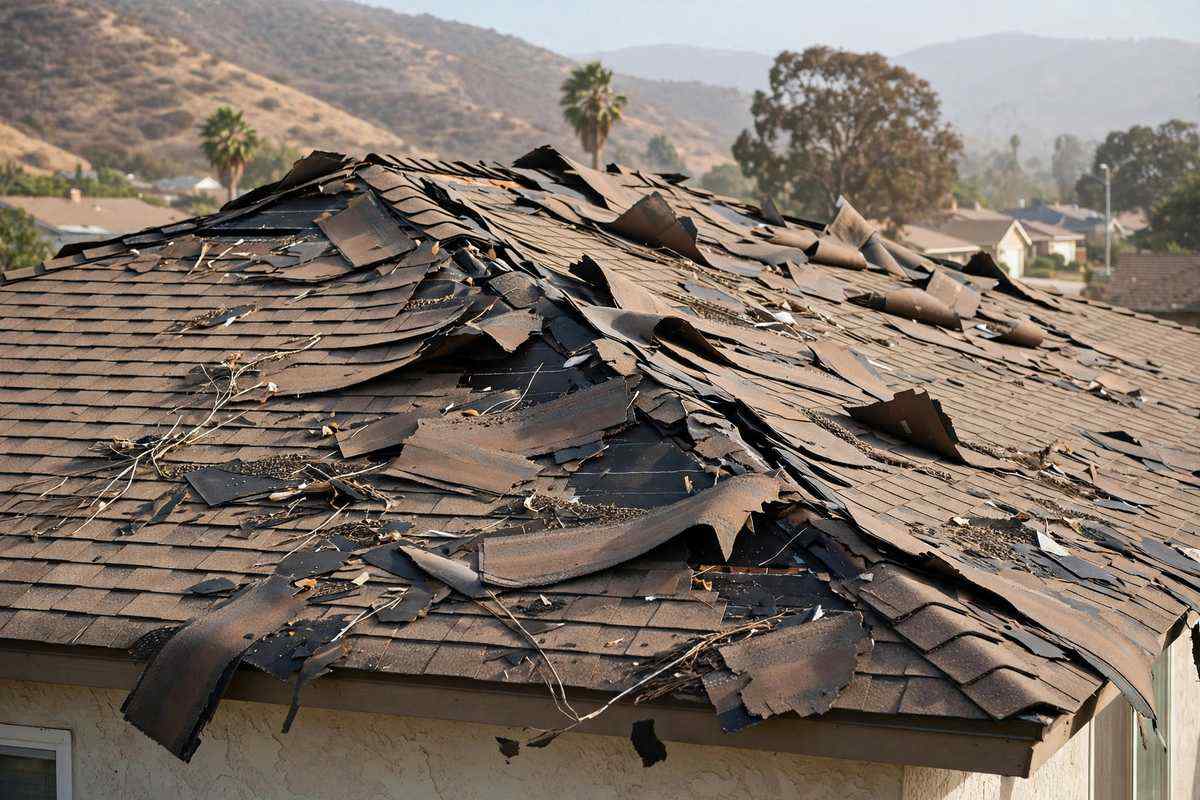
Sheathing thickness and nailing follow the code and the manufacturer's requirements for each roof.
Another city's form is not quoted as Simi Valley's rule.
For a single-family re-roof in CEC Climate Zone 9, the Title 24 Part 6 prescriptive cool-roof values are an aged solar reflectance of at least 0.20 with thermal emittance of at least 0.75, or an SRI of at least 16, on steep slopes of 2:12 or more, and at least 0.63 with emittance of at least 0.75, or an SRI of at least 75, on low slopes under 2:12.
That requirement is triggered when more than 50 percent of the roof area is replaced, which is a different threshold from the City permit trigger, and the parcel's zone should be checked with the CEC zone finder before a product is specified.
Simi Valley contains High and Very High Fire Hazard Severity Zone parcels, but it is not correct to say that all of Simi Valley is Very High.
The parcel's zone must be checked in the CAL FIRE / VCFD Fire Hazard Severity Zone viewer, and on a wildland-urban interface parcel the current citation is Title 24 Part 7, the California Wildland-Urban Interface Code, not the retired CBC Chapter 7A.
Roof decking is the layer everything else depends on, and in Simi Valley it is most often found to be soft or rotted at tear-off, after years of a slow leak that never showed inside until it was advanced.
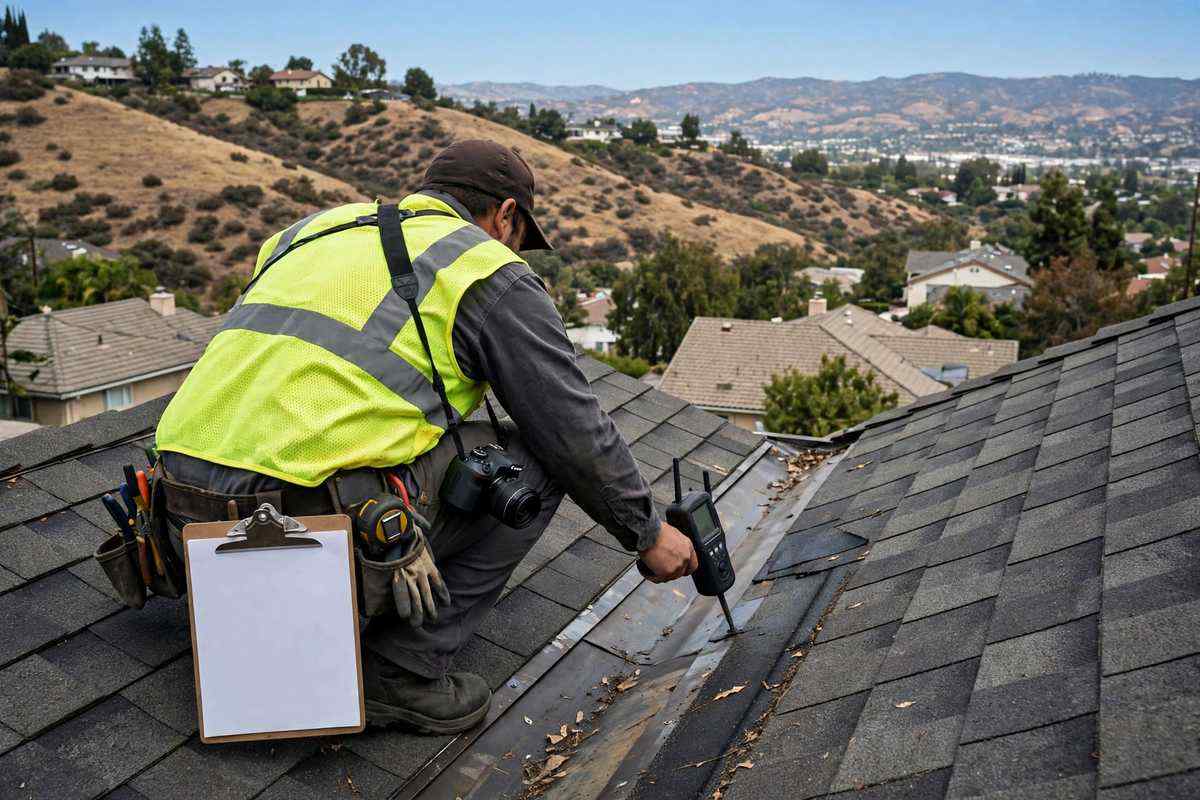
Every job starts with an inspection and a written scope before any work begins.
Published regional market ranges include architectural asphalt at $550 to $900 per square and tile re-lay at $900 to $1,600 per square in a Torrance / South Bay 2026 guide, and California repair work most commonly at $450 to $3,200 in a Modernize guide updated 26 August 2026.
One square is 100 square feet of roof surface, not floor area, and a written estimate follows inspection of the actual roof.
Roof decking is the layer everything else depends on, and in Simi Valley it is most often found to be soft or rotted at tear-off, after years of a slow leak that never showed inside until it was advanced.
Decking repair is therefore scoped at tear-off, not before it.
Soft sheets are shown to you and photographed, replaced, and only then covered with new underlayment.
A scope written before tear-off cannot honestly price decking it has not seen.
Sheathing thickness and nailing follow the code and the manufacturer's requirements for each roof.
Another city's form is not quoted as Simi Valley's rule.
Simi Valley contains High and Very High Fire Hazard Severity Zone parcels, but it is not correct to say that all of Simi Valley is Very High. The parcel's zone must be checked in the CAL FIRE / VCFD Fire Hazard Severity Zone viewer, and on a wildland-urban interface parcel the current citation is Title 24 Part 7, the California Wildland-Urban Interface Code, not the retired CBC Chapter 7A. On such a parcel a Class A fire-rated roof assembly is required.
That requirement is triggered when more than 50 percent of the roof area is replaced, which is a different threshold from the City permit trigger, and the parcel's zone should be checked with the CEC zone finder before a product is specified.
Simi Valley contains High and Very High Fire Hazard Severity Zone parcels, but it is not correct to say that all of Simi Valley is Very High.
The parcel's zone must be checked in the CAL FIRE / VCFD Fire Hazard Severity Zone viewer, and on a wildland-urban interface parcel the current citation is Title 24 Part 7, the California Wildland-Urban Interface Code, not the retired CBC Chapter 7A.
On such a parcel a Class A fire-rated roof assembly is required.
We show you what we find, explain the options, and agree the scope in writing.
Published regional market ranges include architectural asphalt at $550 to $900 per square and tile re-lay at $900 to $1,600 per square in a Torrance / South Bay 2026 guide, and California repair work most commonly at $450 to $3,200 in a Modernize guide updated 26 August 2026.
One square is 100 square feet of roof surface, not floor area, and a written estimate follows inspection of the actual roof.
Roof decking is the layer everything else depends on, and in Simi Valley it is most often found to be soft or rotted at tear-off, after years of a slow leak that never showed inside until it was advanced.
Decking repair is therefore scoped at tear-off, not before it. Soft sheets are shown to you and photographed, replaced, and only then covered with new underlayment. A scope written before tear-off cannot honestly price decking it has not seen.
Sheathing thickness and nailing follow the code and the manufacturer's requirements for each roof. Another city's form is not quoted as Simi Valley's rule.
These are published Oct-2026 regional market ranges, not Treggo Lume prices. A written estimate follows inspection.
For a single-family re-roof in CEC Climate Zone 9, the Title 24 Part 6 prescriptive cool-roof values are an aged solar reflectance of at least 0.20 with thermal emittance of at least 0.75, or an SRI of at least 16, on steep slopes of 2:12 or more, and at least 0.63 with emittance of at least 0.75, or an SRI of at least 75, on low slopes under 2:12. That requirement is triggered when more than 50 percent of the roof area is replaced, which is a different threshold from the City permit trigger, and the parcel's zone should be checked with the CEC zone finder before a product is specified.
Sheathing thickness and nailing follow the code and the manufacturer's requirements for each roof.
Another city's form is not quoted as Simi Valley's rule.
For a single-family re-roof in CEC Climate Zone 9, the Title 24 Part 6 prescriptive cool-roof values are an aged solar reflectance of at least 0.20 with thermal emittance of at least 0.75, or an SRI of at least 16, on steep slopes of 2:12 or more, and at least 0.63 with emittance of at least 0.75, or an SRI of at least 75, on low slopes under 2:12.
Decking repair is therefore scoped at tear-off, not before it. Soft sheets are shown to you and photographed, replaced, and only then covered with new underlayment. A scope written before tear-off cannot honestly price decking it has not seen.
Simi Valley contains High and Very High Fire Hazard Severity Zone parcels, but it is not correct to say that all of Simi Valley is Very High.
The parcel's zone must be checked in the CAL FIRE / VCFD Fire Hazard Severity Zone viewer, and on a wildland-urban interface parcel the current citation is Title 24 Part 7, the California Wildland-Urban Interface Code, not the retired CBC Chapter 7A.
On such a parcel a Class A fire-rated roof assembly is required.
Photos of the problem and the finished repair are shared with you at the end.
Customer reviews are not published on this website yet. If you would like to discuss a roof in Simi Valley, call Treggo Lume Home Roofers at (805) 669-9300 or visit 1712 Erringer Rd, Simi Valley, CA 93065. A written scope follows inspection of the actual roof.
Roof decking is the layer everything else depends on, and in Simi Valley it is most often found to be soft or rotted at tear-off, after years of a slow leak that never showed inside until it was advanced.
A written scope follows inspection of the actual roof, because size, pitch, number of layers, material, access, and permit requirements all change the work. This website does not publish a firm price for this business; published market ranges elsewhere on this site are labelled as market data, not as a quote.
How long the work takes depends on the scope found on inspection: roof size, material, layers to remove, deck repairs, and weather. No completion time is promised on this website; scheduling is arranged by phone after inspection.
The better choice depends on the house: tract or hillside position, roof pitch, weight the framing can carry, fire-zone status, and ventilation. Compare those factors for the actual roof rather than a single ‘best’ label, and confirm permit and fire-zone requirements for the parcel.
Whether a repair or a full replacement is right depends on what inspection finds: isolated damage can often be repaired, while widespread failure, deck damage, or repeated problems usually point to a larger scope. The written scope after inspection states which it is for the actual roof.
Decking repair is therefore scoped at tear-off, not before it. Soft sheets are shown to you and photographed, replaced, and only then covered with new underlayment. A scope written before tear-off cannot honestly price decking it has not seen.
Call Treggo Lume Home Roofers at (805) 669-9300 or visit 1712 Erringer Rd, Simi Valley, CA 93065, to discuss your roof.
For a single-family re-roof in CEC Climate Zone 9, the Title 24 Part 6 prescriptive cool-roof values are an aged solar reflectance of at least 0.20 with thermal emittance of at least 0.75, or an SRI of at least 16, on steep slopes of 2:12 or more, and at least 0.63 with emittance of at least 0.75, or an SRI of at least 75, on low slopes under 2:12. That requirement is triggered when more than 50 percent of the roof area is replaced, which is a different threshold from the City permit trigger, and the parcel's zone should be checked with the CEC zone finder before a product is specified.
(805) 669-9300