
Repair is right when the failure is local and the rest of the system is sound: a single valley, a flashing, a pipe boot, or a few lifted shingles, with deck and underlayment in good condition elsewhere.
When to repair vs replace your roof in Simi Valley
Replacement is right when the failure is systemic: underlayment that has failed under tile across a slope, a deck that is soft in multiple places, or a shingle roof at the end of its heat-aged life across the whole field. Patching a systemic failure buys a season, not a roof.
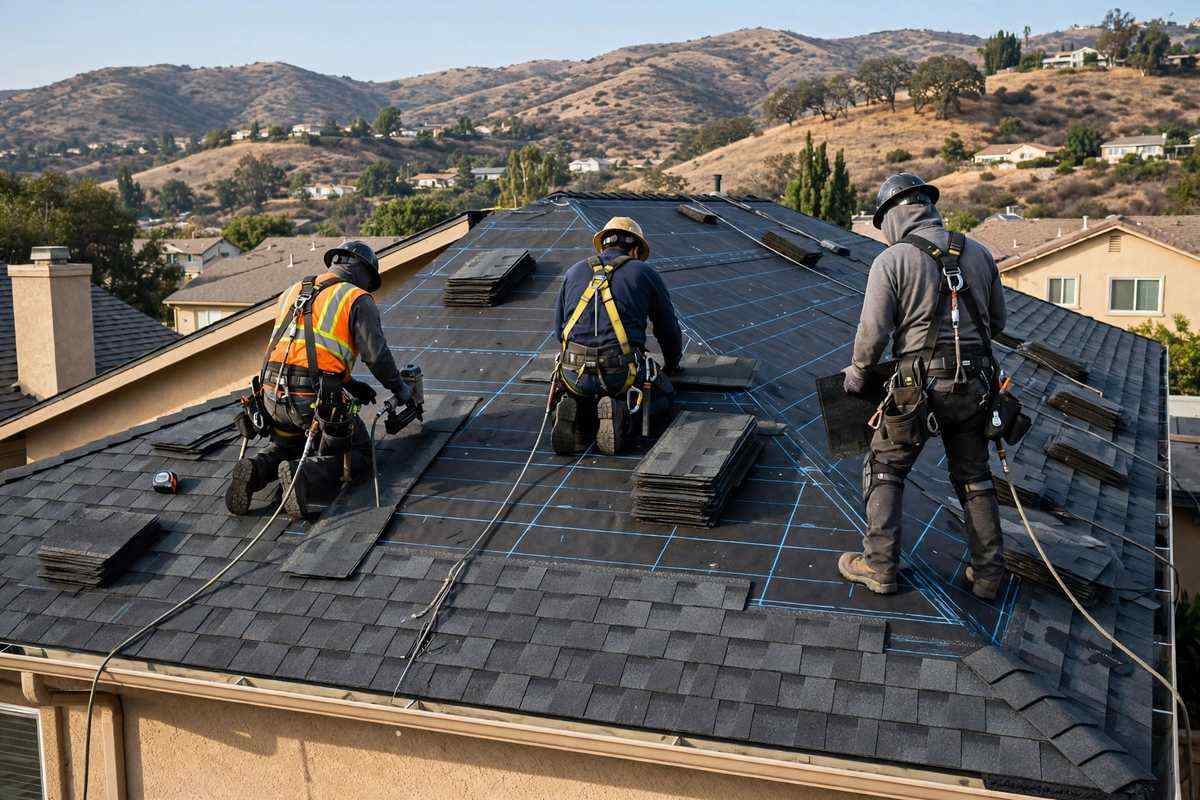
Published regional market ranges include architectural asphalt at $550 to $900 per square and tile re-lay at $900 to $1,600 per square in a Torrance / South Bay 2026 guide, and California repair work most commonly at $450 to $3,200 in a Modernize guide updated 26 August 2026. One square is 100 square feet of roof surface, not floor area, and a written estimate follows inspection of the actual roof.
The short answer: repair vs replace roof Simi Valley CA
Simi Valley is an ageing tract re-roof market, not a new-construction market. Most Simi Valley homes were built in the 1960s and the 1980s, with a median construction year in the late 1970s. A large share of roofs therefore sit on homes 35 to 65 years old, at or beyond a first or second re-roof cycle on age grounds alone, so each roof still needs its own inspection.
Roof demand in Simi Valley is driven by inland heat and ultraviolet exposure, concentrated winter rain, and Santa Ana wind, not by snow. Rain is strongly winter-concentrated and summers are essentially dry, so valleys, flashings and drains sit dry and collect debris for months and are then tested in a handful of winter storms. Santa Ana gusts in Simi Valley have been recorded at 62 mph, as on 4-5 October 2013.
Repair is right when the failure is local and the rest of the system is sound: a single valley, a flashing, a pipe boot, or a few lifted shingles, with deck and underlayment in good condition elsewhere.
Replacement is right when the failure is systemic: underlayment that has failed under tile across a slope, a deck that is soft in multiple places, or a shingle roof at the end of its heat-aged life across the whole field. Patching a systemic failure buys a season, not a roof.
How long does a roof last in Simi Valley CA?
The decision also turns on permits and cool-roof rules. A repair at or below both City limbs, 10 percent and 100 square feet, sits outside the FAQ's permit-required list, while a full replacement requires a City permit and triggers the Climate Zone 9 cool-roof values.
Published regional market ranges include architectural asphalt at $550 to $900 per square and tile re-lay at $900 to $1,600 per square in a Torrance / South Bay 2026 guide, and California repair work most commonly at $450 to $3,200 in a Modernize guide updated 26 August 2026. One square is 100 square feet of roof surface, not floor area, and a written estimate follows inspection of the actual roof.
- Asphalt shingle (3-tab): 15-20 years
- Architectural asphalt shingle: 20-25 years
- Clay or concrete tile: 40-50 years, with underlayment replaced around year 20-25
- Standing seam metal: 40-60 years
- Wood shake: 20-30 years with regular treatment
- Flat / low-slope membrane: 15-25 years depending on coating and drainage
Simi Valley is an ageing tract re-roof market, not a new-construction market. Most Simi Valley homes were built in the 1960s and the 1980s, with a median construction year in the late 1970s. A large share of roofs therefore sit on homes 35 to 65 years old, at or beyond a first or second re-roof cycle on age grounds alone, so each roof still needs its own inspection.
Roof demand in Simi Valley is driven by inland heat and ultraviolet exposure, concentrated winter rain, and Santa Ana wind, not by snow. Rain is strongly winter-concentrated and summers are essentially dry, so valleys, flashings and drains sit dry and collect debris for months and are then tested in a handful of winter storms. Santa Ana gusts in Simi Valley have been recorded at 62 mph, as on 4-5 October 2013.
The 25% rule: the fastest way to decide
Repair is right when the failure is local and the rest of the system is sound: a single valley, a flashing, a pipe boot, or a few lifted shingles, with deck and underlayment in good condition elsewhere.
Replacement is right when the failure is systemic: underlayment that has failed under tile across a slope, a deck that is soft in multiple places, or a shingle roof at the end of its heat-aged life across the whole field. Patching a systemic failure buys a season, not a roof.
The decision also turns on permits and cool-roof rules. A repair at or below both City limbs, 10 percent and 100 square feet, sits outside the FAQ's permit-required list, while a full replacement requires a City permit and triggers the Climate Zone 9 cool-roof values.
- Full asphalt shingle replacement: roughly $14,000-$22,000
- 25% threshold: about $3,500-$5,500
- A $900 flashing repair: repair
- A $4,200 valley rebuild plus two patch areas: replace
Published regional market ranges include architectural asphalt at $550 to $900 per square and tile re-lay at $900 to $1,600 per square in a Torrance / South Bay 2026 guide, and California repair work most commonly at $450 to $3,200 in a Modernize guide updated 26 August 2026. One square is 100 square feet of roof surface, not floor area, and a written estimate follows inspection of the actual roof.
When repair is the right call in Simi Valley
Simi Valley is an ageing tract re-roof market, not a new-construction market. Most Simi Valley homes were built in the 1960s and the 1980s, with a median construction year in the late 1970s. A large share of roofs therefore sit on homes 35 to 65 years old, at or beyond a first or second re-roof cycle on age grounds alone, so each roof still needs its own inspection.
- The roof is under 15 years old, or under 20 for tile and metal.
- The damage is confined to one area - one valley, one chimney, one penetration.
- The attic-side decking is dry and solid when we probe it.
- There is no granule loss across the field and no widespread curling or cracking.
Roof demand in Simi Valley is driven by inland heat and ultraviolet exposure, concentrated winter rain, and Santa Ana wind, not by snow. Rain is strongly winter-concentrated and summers are essentially dry, so valleys, flashings and drains sit dry and collect debris for months and are then tested in a handful of winter storms. Santa Ana gusts in Simi Valley have been recorded at 62 mph, as on 4-5 October 2013.
- Chimney and pipe boot flashing failures
- Wind-lifted shingles after a Santa Ana event
- Valley leaks where debris has collected
- Tile cracks from foot traffic or thermal movement
- Skylight seals that have dried out
Repair is right when the failure is local and the rest of the system is sound: a single valley, a flashing, a pipe boot, or a few lifted shingles, with deck and underlayment in good condition elsewhere.
When replacement is the smarter move
Replacement is right when the failure is systemic: underlayment that has failed under tile across a slope, a deck that is soft in multiple places, or a shingle roof at the end of its heat-aged life across the whole field. Patching a systemic failure buys a season, not a roof.
- Age past service life: 20+ years for asphalt, 25+ for tile underlayment, 30+ for shake.
- Leaks in multiple unrelated spots: two or more active leaks in different areas means the whole system is failing.
- Widespread granule loss: if you find piles of granules in your gutters and the shingles look bare, the surface is gone.
- Soft or stained decking: rot in the sheathing means water has been getting through for a while.
- Visible sagging: a sagging roofline is a structural problem, not a surface problem.
- Storm or fire damage across a large area: when more than a third of the roof is affected, patching is throwing money at a losing battle.
The decision also turns on permits and cool-roof rules. A repair at or below both City limbs, 10 percent and 100 square feet, sits outside the FAQ's permit-required list, while a full replacement requires a City permit and triggers the Climate Zone 9 cool-roof values.
What roof repair or replacement costs in Simi Valley CA in 2026
Published regional market ranges include architectural asphalt at $550 to $900 per square and tile re-lay at $900 to $1,600 per square in a Torrance / South Bay 2026 guide, and California repair work most commonly at $450 to $3,200 in a Modernize guide updated 26 August 2026. One square is 100 square feet of roof surface, not floor area, and a written estimate follows inspection of the actual roof.
Simi Valley is an ageing tract re-roof market, not a new-construction market. Most Simi Valley homes were built in the 1960s and the 1980s, with a median construction year in the late 1970s. A large share of roofs therefore sit on homes 35 to 65 years old, at or beyond a first or second re-roof cycle on age grounds alone, so each roof still needs its own inspection.
- Flashing repair (chimney, pipe boot, sidewall): $350-$900
- Single-area shingle patch: $500-$1,500
- Valley rebuild: $900-$2,500
- Tile repair with matching tile: $600-$2,000
- Leak detection and sealing: $300-$800
Roof demand in Simi Valley is driven by inland heat and ultraviolet exposure, concentrated winter rain, and Santa Ana wind, not by snow. Rain is strongly winter-concentrated and summers are essentially dry, so valleys, flashings and drains sit dry and collect debris for months and are then tested in a handful of winter storms. Santa Ana gusts in Simi Valley have been recorded at 62 mph, as on 4-5 October 2013.
- Architectural asphalt shingle: $14,000-$22,000
- Clay or concrete tile (re-using existing tile where possible): $22,000-$38,000
- Standing seam metal: $28,000-$48,000
- Flat / low-slope membrane section: $1,800-$3,500 per 1,000 sq ft
Repair is right when the failure is local and the rest of the system is sound: a single valley, a flashing, a pipe boot, or a few lifted shingles, with deck and underlayment in good condition elsewhere.
Replacement is right when the failure is systemic: underlayment that has failed under tile across a slope, a deck that is soft in multiple places, or a shingle roof at the end of its heat-aged life across the whole field. Patching a systemic failure buys a season, not a roof.
Simi Valley conditions that shorten roof life
The decision also turns on permits and cool-roof rules. A repair at or below both City limbs, 10 percent and 100 square feet, sits outside the FAQ's permit-required list, while a full replacement requires a City permit and triggers the Climate Zone 9 cool-roof values.
Published regional market ranges include architectural asphalt at $550 to $900 per square and tile re-lay at $900 to $1,600 per square in a Torrance / South Bay 2026 guide, and California repair work most commonly at $450 to $3,200 in a Modernize guide updated 26 August 2026. One square is 100 square feet of roof surface, not floor area, and a written estimate follows inspection of the actual roof.
Simi Valley is an ageing tract re-roof market, not a new-construction market. Most Simi Valley homes were built in the 1960s and the 1980s, with a median construction year in the late 1970s. A large share of roofs therefore sit on homes 35 to 65 years old, at or beyond a first or second re-roof cycle on age grounds alone, so each roof still needs its own inspection.
Roof demand in Simi Valley is driven by inland heat and ultraviolet exposure, concentrated winter rain, and Santa Ana wind, not by snow. Rain is strongly winter-concentrated and summers are essentially dry, so valleys, flashings and drains sit dry and collect debris for months and are then tested in a handful of winter storms. Santa Ana gusts in Simi Valley have been recorded at 62 mph, as on 4-5 October 2013.
Repair is right when the failure is local and the rest of the system is sound: a single valley, a flashing, a pipe boot, or a few lifted shingles, with deck and underlayment in good condition elsewhere.
Replacement is right when the failure is systemic: underlayment that has failed under tile across a slope, a deck that is soft in multiple places, or a shingle roof at the end of its heat-aged life across the whole field. Patching a systemic failure buys a season, not a roof.
Common mistakes homeowners make
The decision also turns on permits and cool-roof rules. A repair at or below both City limbs, 10 percent and 100 square feet, sits outside the FAQ's permit-required list, while a full replacement requires a City permit and triggers the Climate Zone 9 cool-roof values.
Published regional market ranges include architectural asphalt at $550 to $900 per square and tile re-lay at $900 to $1,600 per square in a Torrance / South Bay 2026 guide, and California repair work most commonly at $450 to $3,200 in a Modernize guide updated 26 August 2026. One square is 100 square feet of roof surface, not floor area, and a written estimate follows inspection of the actual roof.
Simi Valley is an ageing tract re-roof market, not a new-construction market. Most Simi Valley homes were built in the 1960s and the 1980s, with a median construction year in the late 1970s. A large share of roofs therefore sit on homes 35 to 65 years old, at or beyond a first or second re-roof cycle on age grounds alone, so each roof still needs its own inspection.
Roof demand in Simi Valley is driven by inland heat and ultraviolet exposure, concentrated winter rain, and Santa Ana wind, not by snow. Rain is strongly winter-concentrated and summers are essentially dry, so valleys, flashings and drains sit dry and collect debris for months and are then tested in a handful of winter storms. Santa Ana gusts in Simi Valley have been recorded at 62 mph, as on 4-5 October 2013.
Repair is right when the failure is local and the rest of the system is sound: a single valley, a flashing, a pipe boot, or a few lifted shingles, with deck and underlayment in good condition elsewhere.
Replacement is right when the failure is systemic: underlayment that has failed under tile across a slope, a deck that is soft in multiple places, or a shingle roof at the end of its heat-aged life across the whole field. Patching a systemic failure buys a season, not a roof.
When to call a professional
The decision also turns on permits and cool-roof rules. A repair at or below both City limbs, 10 percent and 100 square feet, sits outside the FAQ's permit-required list, while a full replacement requires a City permit and triggers the Climate Zone 9 cool-roof values.
Published regional market ranges include architectural asphalt at $550 to $900 per square and tile re-lay at $900 to $1,600 per square in a Torrance / South Bay 2026 guide, and California repair work most commonly at $450 to $3,200 in a Modernize guide updated 26 August 2026. One square is 100 square feet of roof surface, not floor area, and a written estimate follows inspection of the actual roof.
Simi Valley is an ageing tract re-roof market, not a new-construction market. Most Simi Valley homes were built in the 1960s and the 1980s, with a median construction year in the late 1970s. A large share of roofs therefore sit on homes 35 to 65 years old, at or beyond a first or second re-roof cycle on age grounds alone, so each roof still needs its own inspection.
Frequently Asked Questions
Should I repair or replace my roof in Simi Valley CA?
Roof demand in Simi Valley is driven by inland heat and ultraviolet exposure, concentrated winter rain, and Santa Ana wind, not by snow. Rain is strongly winter-concentrated and summers are essentially dry, so valleys, flashings and drains sit dry and collect debris for months and are then tested in a handful of winter storms. Santa Ana gusts in Simi Valley have been recorded at 62 mph, as on 4-5 October 2013.
How do I know if I need a roof replacement in Simi Valley California?
Repair is right when the failure is local and the rest of the system is sound: a single valley, a flashing, a pipe boot, or a few lifted shingles, with deck and underlayment in good condition elsewhere.
What is cheaper, repair or replace a roof in Simi Valley?
Replacement is right when the failure is systemic: underlayment that has failed under tile across a slope, a deck that is soft in multiple places, or a shingle roof at the end of its heat-aged life across the whole field. Patching a systemic failure buys a season, not a roof.
How long does a roof last in Simi Valley CA?
The decision also turns on permits and cool-roof rules. A repair at or below both City limbs, 10 percent and 100 square feet, sits outside the FAQ's permit-required list, while a full replacement requires a City permit and triggers the Climate Zone 9 cool-roof values.
Can I replace just part of my roof?
Published regional market ranges include architectural asphalt at $550 to $900 per square and tile re-lay at $900 to $1,600 per square in a Torrance / South Bay 2026 guide, and California repair work most commonly at $450 to $3,200 in a Modernize guide updated 26 August 2026. One square is 100 square feet of roof surface, not floor area, and a written estimate follows inspection of the actual roof.
Get help with Roofing in Simi Valley
Simi Valley is an ageing tract re-roof market, not a new-construction market. Most Simi Valley homes were built in the 1960s and the 1980s, with a median construction year in the late 1970s. A large share of roofs therefore sit on homes 35 to 65 years old, at or beyond a first or second re-roof cycle on age grounds alone, so each roof still needs its own inspection.
Roof demand in Simi Valley is driven by inland heat and ultraviolet exposure, concentrated winter rain, and Santa Ana wind, not by snow. Rain is strongly winter-concentrated and summers are essentially dry, so valleys, flashings and drains sit dry and collect debris for months and are then tested in a handful of winter storms. Santa Ana gusts in Simi Valley have been recorded at 62 mph, as on 4-5 October 2013.