
The signs that matter in Simi Valley are specific to its climate: a ceiling stain that returns after rain, granules collecting in gutters, cracked or slipped tiles, a ridge cap lifted after Santa Ana wind, and an attic that overheats in summer.
Signs of roof damage every Simi Valley homeowner should know
A stain is a tracing problem, not a location. Valleys, flashings, pipe boots and tile underlayment are checked before the ceiling is blamed. Granule loss is a heat-ageing signal on shingle, and a cracked tile is often less important than the underlayment beneath it.
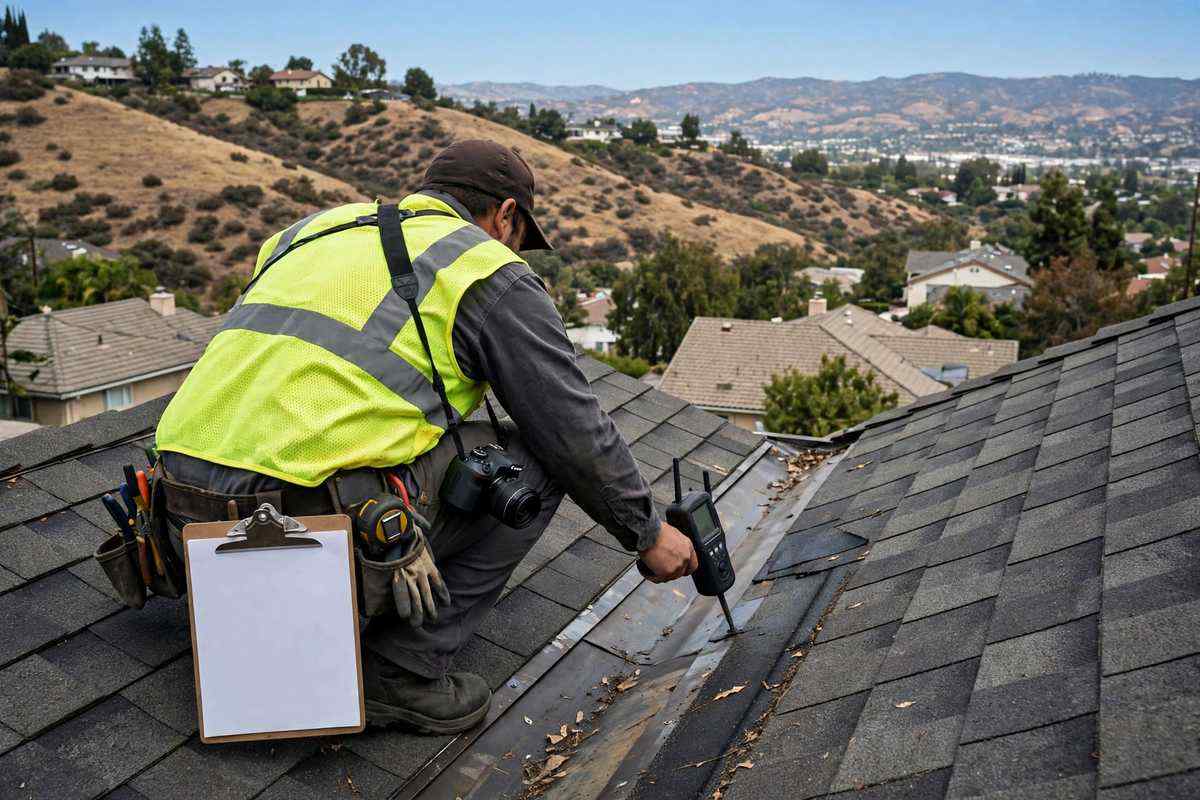
Simi Valley contains High and Very High Fire Hazard Severity Zone parcels, but it is not correct to say that all of Simi Valley is Very High. The parcel's zone must be checked in the CAL FIRE / VCFD Fire Hazard Severity Zone viewer, and on a wildland-urban interface parcel the current citation is Title 24 Part 7, the California Wildland-Urban Interface Code, not the retired CBC Chapter 7A. On such a parcel a Class A fire-rated roof assembly is required.
Why Simi Valley Roofs Take a Beating
Published regional market ranges include architectural asphalt at $550 to $900 per square and tile re-lay at $900 to $1,600 per square in a Torrance / South Bay 2026 guide, and California repair work most commonly at $450 to $3,200 in a Modernize guide updated 26 August 2026. One square is 100 square feet of roof surface, not floor area, and a written estimate follows inspection of the actual roof.
Simi Valley is an ageing tract re-roof market, not a new-construction market. Most Simi Valley homes were built in the 1960s and the 1980s, with a median construction year in the late 1970s. A large share of roofs therefore sit on homes 35 to 65 years old, at or beyond a first or second re-roof cycle on age grounds alone, so each roof still needs its own inspection.
The signs that matter in Simi Valley are specific to its climate: a ceiling stain that returns after rain, granules collecting in gutters, cracked or slipped tiles, a ridge cap lifted after Santa Ana wind, and an attic that overheats in summer.
What are the most common signs of roof damage in Simi Valley CA?
A stain is a tracing problem, not a location. Valleys, flashings, pipe boots and tile underlayment are checked before the ceiling is blamed. Granule loss is a heat-ageing signal on shingle, and a cracked tile is often less important than the underlayment beneath it.
Shingles that curl, cup, or lose their grit
Sagging gutters and soft fascia are roof-edge signs, not gutter-only signs. They mean water has been overflowing or flashing has failed above the fascia, and the source is found before the gutter is replaced.
Simi Valley contains High and Very High Fire Hazard Severity Zone parcels, but it is not correct to say that all of Simi Valley is Very High. The parcel's zone must be checked in the CAL FIRE / VCFD Fire Hazard Severity Zone viewer, and on a wildland-urban interface parcel the current citation is Title 24 Part 7, the California Wildland-Urban Interface Code, not the retired CBC Chapter 7A. On such a parcel a Class A fire-rated roof assembly is required.
Cracked, missing, or displaced shingles
Published regional market ranges include architectural asphalt at $550 to $900 per square and tile re-lay at $900 to $1,600 per square in a Torrance / South Bay 2026 guide, and California repair work most commonly at $450 to $3,200 in a Modernize guide updated 26 August 2026. One square is 100 square feet of roof surface, not floor area, and a written estimate follows inspection of the actual roof.
Rusted or lifted flashing
Simi Valley is an ageing tract re-roof market, not a new-construction market. Most Simi Valley homes were built in the 1960s and the 1980s, with a median construction year in the late 1970s. A large share of roofs therefore sit on homes 35 to 65 years old, at or beyond a first or second re-roof cycle on age grounds alone, so each roof still needs its own inspection.
How do I know if my roof is damaged in Simi Valley California?
The signs that matter in Simi Valley are specific to its climate: a ceiling stain that returns after rain, granules collecting in gutters, cracked or slipped tiles, a ridge cap lifted after Santa Ana wind, and an attic that overheats in summer.
Ceiling and wall stains
A stain is a tracing problem, not a location. Valleys, flashings, pipe boots and tile underlayment are checked before the ceiling is blamed. Granule loss is a heat-ageing signal on shingle, and a cracked tile is often less important than the underlayment beneath it.
Attic clues
Sagging gutters and soft fascia are roof-edge signs, not gutter-only signs. They mean water has been overflowing or flashing has failed above the fascia, and the source is found before the gutter is replaced.
Daylight and sagging
Simi Valley contains High and Very High Fire Hazard Severity Zone parcels, but it is not correct to say that all of Simi Valley is Very High. The parcel's zone must be checked in the CAL FIRE / VCFD Fire Hazard Severity Zone viewer, and on a wildland-urban interface parcel the current citation is Title 24 Part 7, the California Wildland-Urban Interface Code, not the retired CBC Chapter 7A. On such a parcel a Class A fire-rated roof assembly is required.
Damage You Can Only See From the Ground or the Attic
Published regional market ranges include architectural asphalt at $550 to $900 per square and tile re-lay at $900 to $1,600 per square in a Torrance / South Bay 2026 guide, and California repair work most commonly at $450 to $3,200 in a Modernize guide updated 26 August 2026. One square is 100 square feet of roof surface, not floor area, and a written estimate follows inspection of the actual roof.
- Gutter piles: Granules, shingle tabs, and broken sealant collecting at downspouts tell you the roof above is shedding material.
- Fascia and soffit rot: Soft, discolored wood along the roofline means water is running behind the gutter instead of through it.
- Chimney and skylight seals: Cracked caulk or lifted metal here leaks straight into your living space.
- Valley and ridge wear: The low points where two roof planes meet take double the water flow and wear out first.
- Pipe boot cracks: The rubber collar around plumbing vents dries out and splits after 8 to 12 years in our climate.
Simi Valley is an ageing tract re-roof market, not a new-construction market. Most Simi Valley homes were built in the 1960s and the 1980s, with a median construction year in the late 1970s. A large share of roofs therefore sit on homes 35 to 65 years old, at or beyond a first or second re-roof cycle on age grounds alone, so each roof still needs its own inspection.
What to Watch Out For: Mistakes That Cost Simi Valley Homeowners Money
The signs that matter in Simi Valley are specific to its climate: a ceiling stain that returns after rain, granules collecting in gutters, cracked or slipped tiles, a ridge cap lifted after Santa Ana wind, and an attic that overheats in summer.
A stain is a tracing problem, not a location. Valleys, flashings, pipe boots and tile underlayment are checked before the ceiling is blamed. Granule loss is a heat-ageing signal on shingle, and a cracked tile is often less important than the underlayment beneath it.
Sagging gutters and soft fascia are roof-edge signs, not gutter-only signs. They mean water has been overflowing or flashing has failed above the fascia, and the source is found before the gutter is replaced.
When to Call a Professional
Simi Valley contains High and Very High Fire Hazard Severity Zone parcels, but it is not correct to say that all of Simi Valley is Very High. The parcel's zone must be checked in the CAL FIRE / VCFD Fire Hazard Severity Zone viewer, and on a wildland-urban interface parcel the current citation is Title 24 Part 7, the California Wildland-Urban Interface Code, not the retired CBC Chapter 7A. On such a parcel a Class A fire-rated roof assembly is required.
Published regional market ranges include architectural asphalt at $550 to $900 per square and tile re-lay at $900 to $1,600 per square in a Torrance / South Bay 2026 guide, and California repair work most commonly at $450 to $3,200 in a Modernize guide updated 26 August 2026. One square is 100 square feet of roof surface, not floor area, and a written estimate follows inspection of the actual roof.
Simi Valley is an ageing tract re-roof market, not a new-construction market. Most Simi Valley homes were built in the 1960s and the 1980s, with a median construction year in the late 1970s. A large share of roofs therefore sit on homes 35 to 65 years old, at or beyond a first or second re-roof cycle on age grounds alone, so each roof still needs its own inspection.
Frequently Asked Questions
What are signs of roof damage in Simi Valley CA?
The signs that matter in Simi Valley are specific to its climate: a ceiling stain that returns after rain, granules collecting in gutters, cracked or slipped tiles, a ridge cap lifted after Santa Ana wind, and an attic that overheats in summer.
How do I know if my roof is damaged in Simi Valley California?
A stain is a tracing problem, not a location. Valleys, flashings, pipe boots and tile underlayment are checked before the ceiling is blamed. Granule loss is a heat-ageing signal on shingle, and a cracked tile is often less important than the underlayment beneath it.
When should I call a roofer for damage in Simi Valley?
Sagging gutters and soft fascia are roof-edge signs, not gutter-only signs. They mean water has been overflowing or flashing has failed above the fascia, and the source is found before the gutter is replaced.
Can roof damage be repaired in Simi Valley CA?
Simi Valley contains High and Very High Fire Hazard Severity Zone parcels, but it is not correct to say that all of Simi Valley is Very High. The parcel's zone must be checked in the CAL FIRE / VCFD Fire Hazard Severity Zone viewer, and on a wildland-urban interface parcel the current citation is Title 24 Part 7, the California Wildland-Urban Interface Code, not the retired CBC Chapter 7A. On such a parcel a Class A fire-rated roof assembly is required.
How much does a roof inspection cost in Simi Valley?
Published regional market ranges include architectural asphalt at $550 to $900 per square and tile re-lay at $900 to $1,600 per square in a Torrance / South Bay 2026 guide, and California repair work most commonly at $450 to $3,200 in a Modernize guide updated 26 August 2026. One square is 100 square feet of roof surface, not floor area, and a written estimate follows inspection of the actual roof.
Get Help With Roofing in Simi Valley
Simi Valley is an ageing tract re-roof market, not a new-construction market. Most Simi Valley homes were built in the 1960s and the 1980s, with a median construction year in the late 1970s. A large share of roofs therefore sit on homes 35 to 65 years old, at or beyond a first or second re-roof cycle on age grounds alone, so each roof still needs its own inspection.
The signs that matter in Simi Valley are specific to its climate: a ceiling stain that returns after rain, granules collecting in gutters, cracked or slipped tiles, a ridge cap lifted after Santa Ana wind, and an attic that overheats in summer.